
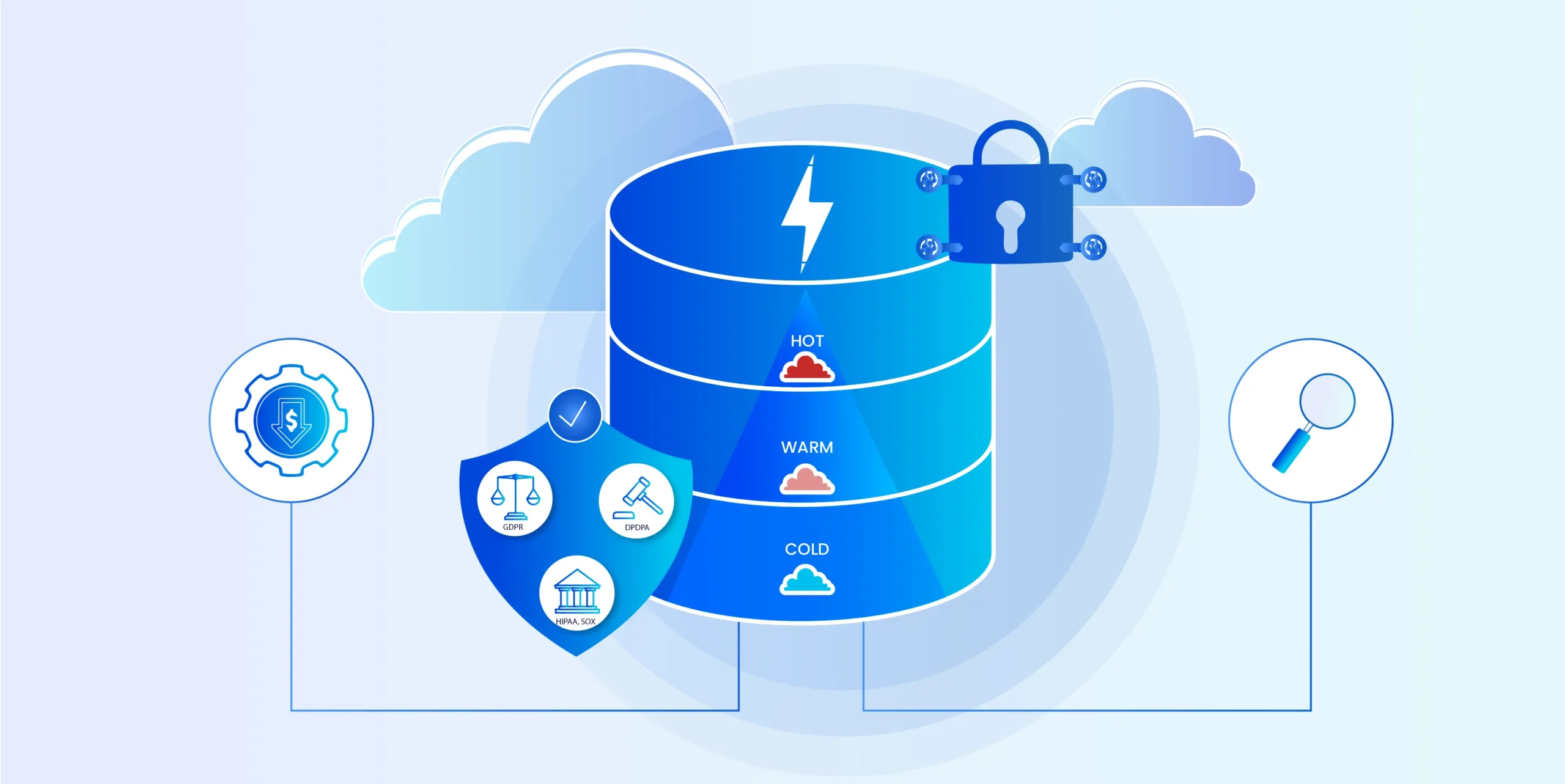
Every organization reaches a point where its data infrastructure starts working against it. Queries slow down. Storage costs creep up quarter after quarter. IT teams spend more time managing clutter than building anything useful. And somewhere buried in that mess is data that nobody actively uses but nobody wants to delete either.
This is not a niche problem. It is one of the most consistent operational challenges businesses face as they scale. The good news? It has a practical, well-established fix: enterprise data archiving.
What Data Archiving Actually Means and What It Doesn’t
Data archiving is the process of identifying data that is no longer actively used and moving it out of primary systems into secure, lower-cost storage, while keeping it searchable and retrievable when needed. It’s not about deleting data or locking it away forever. It’s about giving data the right home based on how often it’s actually needed.
That said, there is a common misconception that archiving is just another word for backup. It is not.
| Backup | Archiving | |
|---|---|---|
| Purpose | Recovery from failure or loss | Long-term storage of inactive data |
| Data Type | Active, current data copies | Rarely accessed, historical data |
| Storage Tier | Primary / high-performance | Lower-cost, long-term storage |
| Access Frequency | Frequent (when needed) | Occasional / on-demand |
| Goal | Business continuity | Cost reduction + compliance |
When businesses implement data archiving solutions, they are not simply relocating files. They are making a deliberate decision about which data belongs in high-performance systems and which data belongs elsewhere without losing access to either.
The Cost Problem Nobody Talks About Loudly Enough
Storage feels cheap until you break it down. Most enterprise data go untouched after 90 days yet it keeps occupying expensive primary storage.
Hidden costs of unarchived data include:
- Inflated storage bills — paying top-tier rates for data nobody’s accessing
- Higher compute overhead — bloated databases demand more processing power
- Slower backup cycles — larger datasets mean longer, costlier windows
- Increased licensing costs — many licenses scale with data volume
Proper archive data solutions address this by tiering data based on actual usage. Moving inactive data off primary systems produces real savings without any operational disruption.
System Performance: The Silent Victim of Data Bloat
Data bloat doesn’t announce itself. It creeps up until one day, something that used to be fast just isn’t anymore. Common warning signs:
- Reports and dashboards load noticeably slower
- Query times climb without any infrastructure changes
- Application response times degrade for end users
- Routine maintenance windows stretch longer and longer
The usual reaction is to invest in faster hardware. But if the root cause is bloat, the relief is temporary. A disciplined approach to data storage and archiving fixes the structural problem, not just the symptom.
Compliance and the Cost of Getting It Wrong
Data carries legal obligations. Retention requirements vary widely by industry:
| Industry | Retention Period | Key Regulation |
|---|---|---|
| Healthcare | 7–10 years | HIPAA |
| Finance & Banking | 5–7 years | SOX, FINRA |
| Legal Services | 7–10 years | State Bar Requirements |
| Retail / E-commerce | 3–5 years | PCI-DSS, GDPR |
Without a clear archiving strategy, organizations either retain everything indefinitely, driving up costs, or delete data inconsistently, creating compliance gaps. Archiving builds structure around retention, so when an audit or legal request arrives, you’re ready.
Act Before It Becomes Urgent
The longer archiving gets delayed, the harder and costlier it becomes to fix. Organizations that get ahead of data sprawl run tighter systems, respond to compliance demands with confidence, and free up their IT teams to focus on work that actually moves the business forward.
Ready to bring order to your data? Explore enterprise-grade data archiving solutions built for organizations serious about performance and compliance.


More Stories
The Next Big Leap: 2024’s Breakthrough IT Trends Reshaping the Future
Techno Tales: Decoding the Future Through Information Technology
Innovate Tomorrow: Cutting-Edge IT Solutions for a Smarter Future